
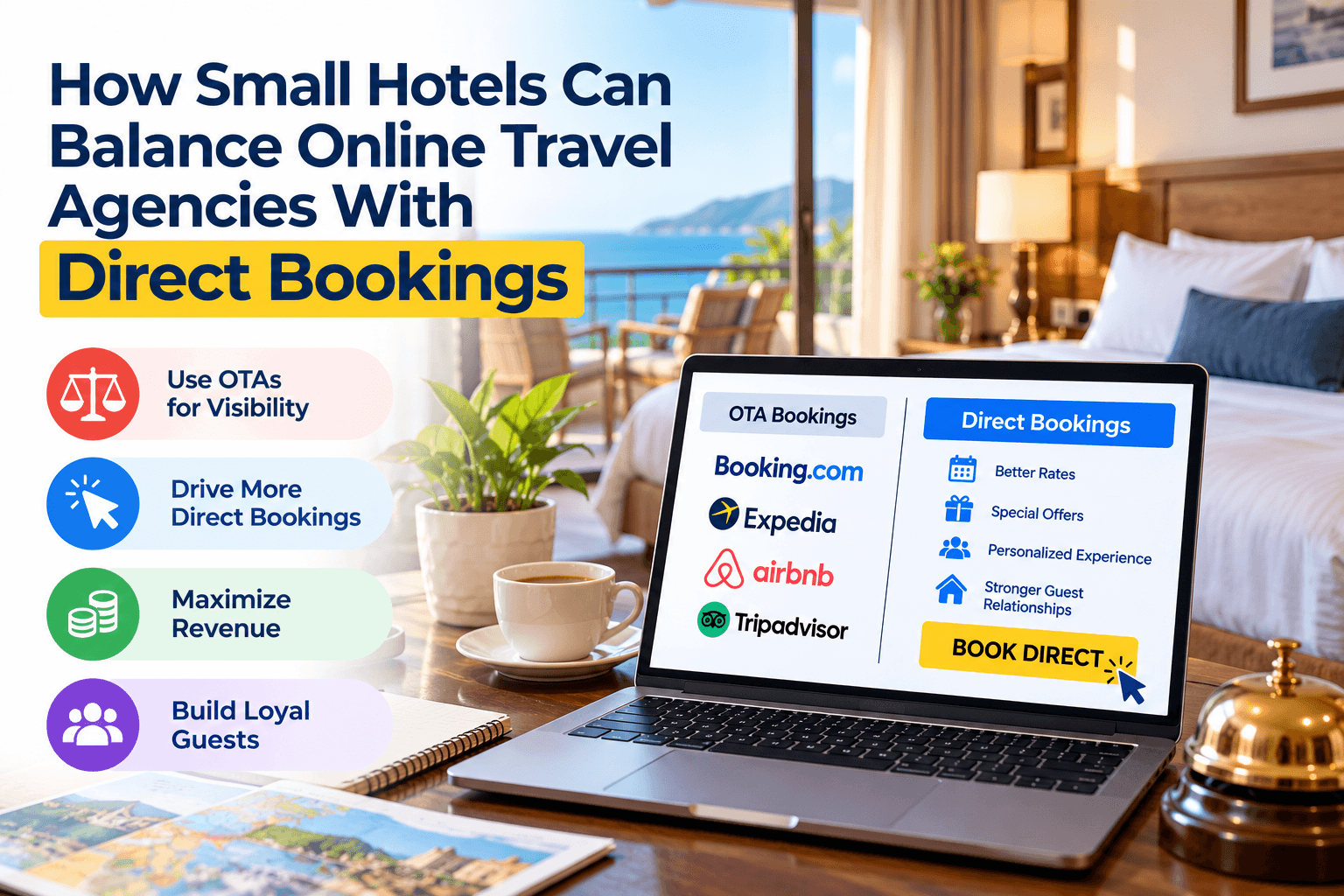
A 22-room boutique hotel in Savannah gets most of its reservations through large online travel agencies. The owner appreciates the exposure but pays a commission on every booking. When she looks at her own Google profile, the most visible booking buttons lead to those same third-party sites.
Online travel agencies, often called OTAs, help small hotels reach travelers. Many owners also want a reliable share of direct bookings. The goal is to use both thoughtfully.
What OTAs Do Well
Large booking sites reach travelers who have never heard of your property. They handle payments, offer loyalty programs, and appear prominently in search results. For a new or independent hotel, they can fill rooms that might otherwise sit empty.
The tradeoff is cost and control. OTAs charge commissions, and the guest relationship often starts on their platform rather than yours. Your contracts may also include rules about rate parity, which affects how you can price rooms on your own website. Smaller properties often feel these terms most, since every commission comes out of a thin margin.
Make Direct Booking Easy
Start with your own website. Use a booking engine that works well on phones and shows real-time availability. Make the Book Now button visible on every page. Many hotels add small direct-booking perks, such as flexible cancellation or a welcome amenity, where their OTA agreements allow it.
On your Google Business Profile, Google Hotel Center lets properties manage how rates and booking links appear, including free booking links that can show your official site alongside OTAs. Check your profile’s hotel information, photos, and amenities as well, since travelers compare those details quickly.
Keep Every Listing Accurate
Travelers notice when amenities, photos, or policies differ between platforms. Keep one master list of room types, amenities, parking fees, pet policies, and check-in times, and use it to update every OTA, your Google profile, and your website. Ask returning guests how they booked, so you can see which channels bring repeat stays.
Independent directories add another route to your official website. Properties listed in the Hotels and Resorts category on AddSocial can link straight to their own booking page rather than a third-party site. Make sure your AddSocial listing matches your website’s amenities and policies.
Use OTAs Without Depending on Them
OTAs help small hotels reach new travelers, but a healthy mix includes direct bookings. Make your website’s booking path fast and mobile-friendly, use Google Hotel Center to show your official site, and keep amenities consistent everywhere. Listings like AddSocial that link to your own site give travelers one more direct route.